Have you ever noticed how some tiny houses look perfect on day one, but a year later the owners admit they would redesign half of it if they could?
That is the real test of a layout. Not the photos, not the first week of excitement, but daily life after months of sleeping, cooking, working, relaxing, arguing, storing groceries, drying laundry, and simply existing in the same small box.
A layout that works long term is not about clever novelty. It is about comfort, predictable routines, and spaces that actually match real life instead of Pinterest boards.
Let’s look at tiny house layout examples that genuinely hold up after a year or more of living, and more importantly, why they do.
What makes a tiny house layout stay livable long term
Before getting into specific examples, it helps to understand why certain designs survive the one-year mark while others slowly become frustrating.
Most people discover that tiny living is not about squeezing into the smallest measurable footprint, but about shaping space so daily habits feel natural rather than restrictive.
The layouts that age well usually focus on circulation, simplicity, and comfort, instead of trying to pack in every possible feature.
Owners rarely regret functional space. They regret clever but inconvenient ideas.
Most layouts that last tend to include:
- A clear walking path without obstacles through the house
- A sitting area that actually feels like a couch, not a perch
- A kitchen sized for real cooking, not staged photos
- Storage that is easy to reach, not hidden puzzle compartments
Single level tiny homes that actually feel like homes
A lot of people realize after a year that climbing a ladder every day was charming at first, but very old very quickly. That is why single level layouts keep proving themselves.
When everything is on one level, the tiny house immediately feels calmer, more open, and friendlier to long term living. It is especially good for people who plan to age in place, have pets, or simply want fewer compromises in daily comfort.
Many modern designs are now built this way, and if you are looking for tiny homes for sale in the US, you will often notice that single floor plans tend to appear again and again because people actually stay in them comfortably.
Stability and simplicity age surprisingly well.
Loft sleeping with main floor comfort that still works after a year
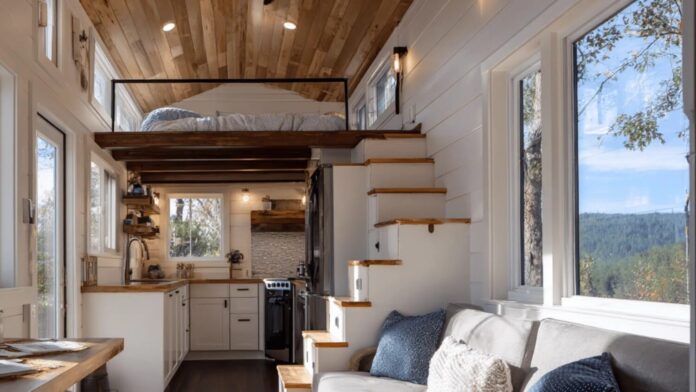
Loft layouts can still succeed long term, but only when the rest of the house truly supports daily living on the main level.
The loft should feel like a private sleeping nook, not a daily struggle. What usually determines success is ceiling height, safe access, and ventilation.
Meanwhile, the downstairs must remain a functioning living space that feels relaxing rather than cramped.
When those elements align, loft layouts can still feel livable, cozy, and surprisingly enduring.
A simple way to think about lasting loft layouts:
| Works Long Term | Fails After A Year |
| Stairs with rails | Narrow ladders |
| Real mattress space | Crawling space only |
| Ventilation and window | Stuffy or dark loft |
| Main floor lounge area | Kitchen table only |
If the loft feels like a bedroom and the downstairs feels like a living room, the layout holds up.
Tiny house layouts that truly support working from home
Many people discover after a few months that kitchen tables do not make good permanent desks.
That is why layouts with a defined workspace age so much better, especially for remote workers.
A proper work zone lets you mentally separate “home time” and “work time”, which matters far more in a tiny footprint than most expect.
It prevents laptops from invading the only dining surface and keeps wires, notebooks, and chargers from becoming visual clutter.
Important to know: In most building discussions, a tiny house is typically defined as a dwelling under 400 square feet of floor area (based on guidelines referenced in the International Residential Code Appendix Q for tiny houses). This size reality is exactly why intentional workspace design matters so much.
When a layout gives work its own corner, people report far less frustration after a year.
Family friendly tiny house layouts with two real sleeping zones
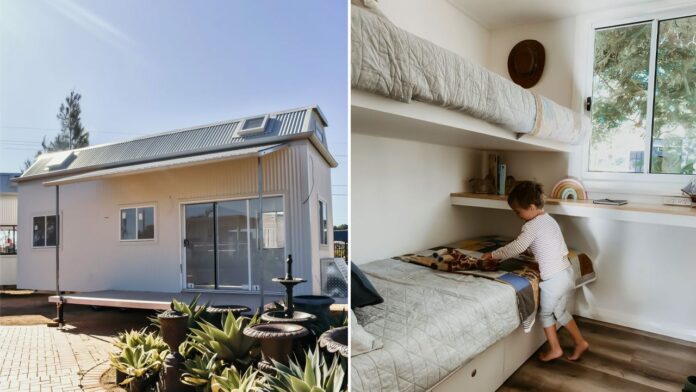
Living solo in a tiny home is one thing. Living as a couple or family quickly reveals whether a layout was designed thoughtfully or optimistically.
The tiny homes that survive a year with multiple people usually offer some form of separation or zoning, even within a small footprint.
That can mean a loft and main floor bedroom, or a bedroom and a convertible but genuinely comfortable sleeping solution. Privacy is not about walls.
It is about giving people moments of personal space.
Layouts that hold up well for more than one person often include:
- Two distinct sleeping areas
- A door, curtain, or visual divider for at least one zone
- A living area big enough for everyone to sit comfortably
- Storage that belongs to each individual, not shared chaos
When people can retreat emotionally and physically, the home stays peaceful longer.
Storage prioritized layouts that feel uncluttered even after 12 months
Almost every tiny house owner eventually admits the same thing.
Storage matters far more than they thought. The layouts that still feel sane after a year are the ones that gave storage intentional space instead of leftover space.
Deep drawers instead of dozens of tiny compartments. Proper closets instead of one shelf.
Thoughtful hidden storage only when it is actually practical to access.
Did you know?
A surprising number of tiny house regrets are not about size, but about accessibility. People do not regret having fewer things.
They regret needing to lift three boards and open two panels just to reach a winter coat.
The layouts that win long term are the ones where storage is not a puzzle, but a relief.
When belongings have predictable homes, daily life feels calmer.
Kitchen forward layouts that support real everyday cooking
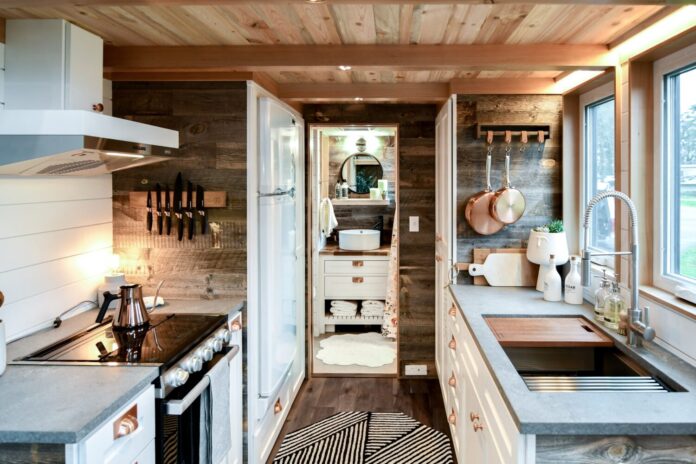
If someone cooks regularly, the kitchen becomes the emotional center of the tiny house.
After a year, tiny homeowners consistently value kitchens with good counter space, real appliances, and comfortable movement.
A layout that allows two people to be in the kitchen without frustration tends to remain pleasant.
Even for solo living, a usable kitchen simply makes the tiny home feel more like a legitimate residence instead of a novelty cabin.
Good long term kitchen layouts usually include enough counter to chop and prepare food, a fridge that actually stores groceries for more than two days, and a sink size that makes cleaning practical.
When the kitchen feels competent rather than miniature, homeowners feel settled instead of compromised.
Bathroom, utilities and the hidden side of long term comfort
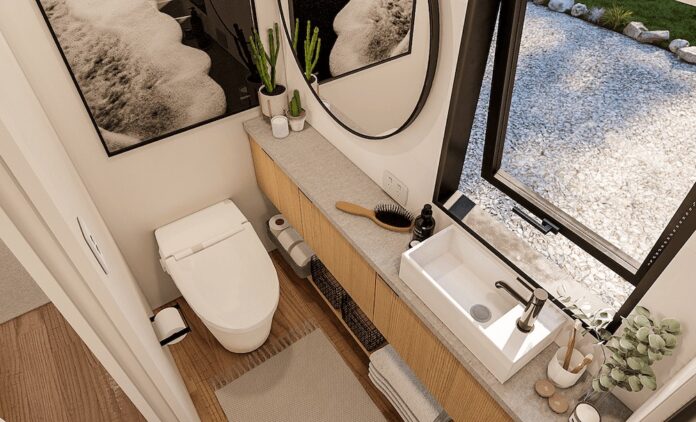
Bathrooms rarely look like the star of tiny house tour photos, but they completely control day to day comfort.
A layout ages well when the bathroom feels private, is not squeezed into an impossible angle, and allows easy maintenance.
The same goes for utility placement. Systems that are easy to reach get repaired, serviced, and cared for. Systems buried in creative cabinetry eventually become headaches.
A well aged layout often places utilities where you can open them without moving half the house.
Bathrooms that allow normal movement, real ventilation, and some sense of separation from living areas tend to keep people happier over time.
Tiny living should never mean compromising basic dignity and practicality.
So which tiny house layouts truly last?
The layouts that survive beyond the novelty phase are rarely the loudest or most design-show dramatic.
They are the ones built around human behavior, not visual tricks.
They make sitting comfortable, cooking natural, resting private, and storage easy.
They respect how people move, how they work, and how routines evolve.
That is why owners living happily in their tiny homes a year later usually talk less about “wow moments” and more about reliability, ease, and a feeling that their space quietly supports them instead of constantly asking for patience.
The best tiny house layouts are not just clever. They are kind to real life.