

Scaling is messy. One month, you’re scrambling for new hires; the next, for more cash. The sweet spot, where growth is real, stable,and controlled, comes when you build systems that anticipate strain rather than just reacting. And the two pillars that enable that? Smarter risk management and iron-clad financial strategy.
Below is a roadmap to prepare your business for scale without tripping over avoidable risks. I’ll walk you through mindset, tools, structure, and execution.
Setting the Mindset ─ Growth and Risk Are Not Enemies
When you tell a founder “you must mitigate risk,” their eyes glaze over, or worse, they hear “don’t take risks, sit still.” That’s the wrong message. The right one is: you scale by controlling risks, not suppressing every threat.
Growth without structure is fragile. In fact, 83 % of companies say growth is their primary objective even in volatile times, despite underlying risks. When you square that ambition with rigorous risk management, you go from hoping growth sticks to ensuring it sticks.
Here’s the mental pivot:
- Think of risk not as a barrier but as a set of constraints you can shape, plan around, and absorb.
- Use stress tests and scenario thinking (the “what if the supplier fails, the market shifts, interest rates jump” drills) as core weapons.
- Don’t assume your early success protects you; the bigger you get, the more exposed you become.
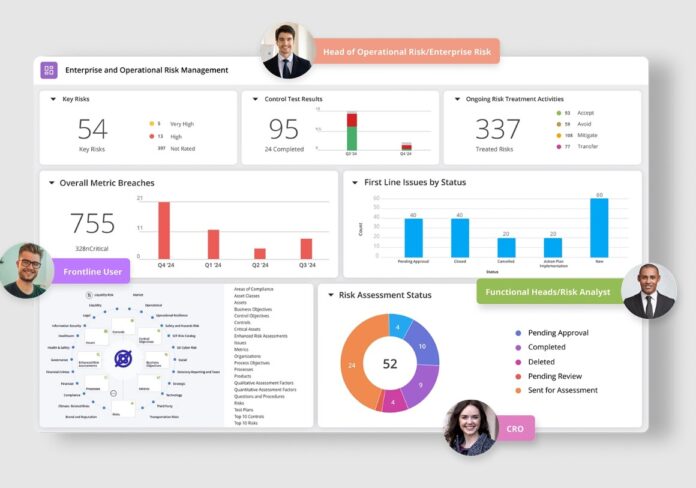
Did you know that the global risk management software market is forecast to grow from about USD 4.19 billion in 2025 to USD 10.79 billion by 2032, reflecting how seriously organizations are investing in structured tools.
Once your outlook shifts from “let’s hope nothing bad happens” to “what can break, and how will we handle it,” everything downstream, finance, ops, and HR, tightens and strengthens.
Aligning Financial Strategy With Risk Posture
Risk and finance must not live in silos. The moment your CFO or finance leader is disconnected from your risk conversation is the moment something blindsides you.
This is where bringing in a Fractional Finance Director as part of your leadership mix can recalibrate you in real time.
With the right person in that role, you get:
- Integration of risk insights into financial forecasts (liquidity planning, scenario overlays)
- Financial discipline injected into budgeting, capex decisions, and capital structure (so risk doesn’t get valorized over prudence)
- The flexibility to scale finance leadership without committing to a full-time senior hire prematurely
When you have someone who looks at cash, balance sheet, and growth levers through the lens of risk, you stop getting surprises and start making bolder, safer plays.

Building the Framework ─ Four Core Risk Domains
Not every risk can be eliminated, but focusing on four core areas, operations, vendors, finance, and strategy, gives your company a stronger foundation for growth.
1. Operational Risk and Process Breakdowns
As companies scale, informal fixes turn into weak points. A shortcut that worked for a small team can cause serious breakdowns at higher volumes. Operational risks appear in fulfillment delays, onboarding errors, or customer support gaps.
The solution is to standardize processes, automate where possible, and identify choke points that rely on one person or fragile systems. Running “what if” scenarios helps you see how the business reacts to disruptions, giving you fallback options before real failures occur.
2. Third-party and Vendor Risk
Growth often relies on vendors, but over-dependence can backfire. Studies show a third of executives rank vendor risk as a major threat, while many admit they lack visibility into their partners’ health. If a supplier fails, your scale stalls. To reduce exposure, perform due-diligence checks, classify vendors by importance, and monitor performance regularly. Contracts should include exit rights or backup options. Treating vendors as part of your risk strategy, not just service providers, keeps your growth resilient.
3. Financial Risk (Liquidity, Credit, Interest Rate)
Financial pressure multiplies with scale. Late payments, interest hikes, or cash shortfalls can destabilize momentum quickly. Building resilience means forecasting across best-, base-, and worst-case scenarios each quarter, then stress testing them, what if revenue drops ten percent, or receivables are delayed by a month?
A liquidity buffer is essential, along with a clear grasp of debt covenants and investor terms. By preparing for downside cases in advance, you preserve flexibility when opportunities or shocks arrive.

4. Strategic Risk and Regulatory / Compliance Shifts
Expanding into new markets or product lines introduces more than financial challenges. Regulatory shifts, compliance obligations, or competitive changes can derail unprepared companies.
Every move should start with a risk assessment: which laws apply, what operational changes are required, and what’s the worst case? Assigning someone to track emerging rules and industry changes helps you act early, not react late. Embedding risk reviews into decision-making ensures growth initiatives align with compliance and strategy, not against them.
Final Thoughts
Growth always tests the strength of a business, but those tests don’t have to become breaking points. With smarter risk management, you’re not just preventing disasters, you’re creating the conditions for growth that can actually last. Pairing that with a disciplined financial strategy makes the difference between momentum that fizzles out and a business that matures with confidence.
The companies that thrive are rarely the ones that took the biggest risks blindly. They’re the ones that prepared, planned, and built enough resilience to absorb the shocks that come with scaling. Put those systems in motion early, and every step forward feels less like a gamble and more like an intentional stride toward sustainable success.