
Every clinician knows the moment, a patient sits down, X-rays on screen, and the puzzle begins. What’s visible isn’t always what’s happening below the surface. Traditionally, dental case evaluation has relied on experience, intuition, and cross-referencing data from multiple systems. But as practices grow busier and diagnostics become more data-heavy, even the sharpest clinicians benefit from a quiet, analytical ally: machine learning.
Machine learning (ML) is transforming how dental teams review and plan cases. By detecting patterns across thousands of similar images and patient records, it adds a new layer of clarity and confidence to decisions that once depended purely on human judgment.
ML doesn’t replace clinical expertise; it amplifies it with speed, accuracy, and consistency.
From Guesswork to Guidance: How ML Analyzes Dental Data
Machine learning models are trained on extensive dental datasets – radiographs, intraoral scans, periodontal charts, and treatment outcomes. These systems learn to recognize subtle features a clinician might overlook, such as early bone loss, atypical lesion shapes, or slight deviations in occlusion.
What this means in practice:
- Automated radiograph analysis helps flag early signs of decay or pathology.
- Pattern recognition supports faster differential diagnosis.
- Predictive analytics estimate treatment success probabilities based on similar cases.
Clinicians still lead the final judgment, but ML tools simplify the process of narrowing down diagnostic possibilities and validating chosen approaches.
Integrating Human Insight with AI Tools
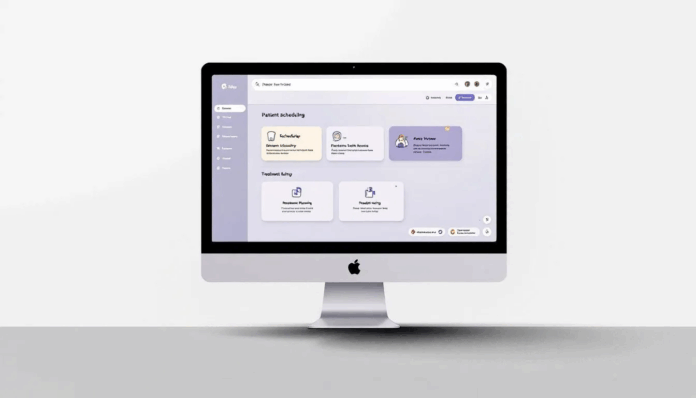
Modern dental software platforms use machine learning to streamline case evaluation without removing the clinician’s intuition. One such example is Trust AI, a platform designed to enhance diagnostic confidence through secure and transparent data modeling. It allows dentists to cross-check their evaluations with AI-driven insights while maintaining full control over patient decisions.
This collaboration reflects a growing trend in dental technology – systems that learn from real clinical feedback. When dentists validate or adjust AI suggestions, the algorithm itself improves over time. It’s a learning partnership, not automation replacing expertise.
“The most effective AI tools don’t tell dentists what to think – they help them think faster, with more context.”
Training Models for Better Accuracy
Behind every dependable AI system in dentistry lies a rigorous and ongoing training process. Machine learning models are not static; they evolve through continuous exposure to diverse, verified dental data. Each X-ray, CBCT scan, or annotated case contributes to refining the system’s ability to recognize subtle variations and improve predictive outcomes.
How accuracy improves over time:
- Clinical feedback loops help correct misclassifications and strengthen the model.
- Inclusion of diverse patient demographics reduces diagnostic bias.
- Regular algorithm updates incorporate the latest research and imaging techniques.
This cycle of learning mirrors the professional growth of a dentist – every new case teaches the system something valuable. The more representative the data, the more confident clinicians can be in the insights machine learning provides.
Before and After: ML’s Impact on Case Evaluation
Below is a simplified look at how ML integration changes daily workflows in dental evaluation.
| Step in Case Evaluation | Before ML Integration | After ML Integration |
| Radiograph Review | Manual inspection, prone to fatigue | Automated detection highlights key areas |
| Treatment Planning | Based on experience and notes | Supported by predictive modeling |
| Case Presentation | Static visuals, limited data | Interactive 3D visualization and outcome simulation |
| Follow-up Analysis | Reactive adjustments | Continuous feedback from data-driven insights |
The difference lies not just in efficiency but in consistency. ML systems maintain focus across hundreds of cases, catching trends that might otherwise fade into the daily routine.
Did You Know?
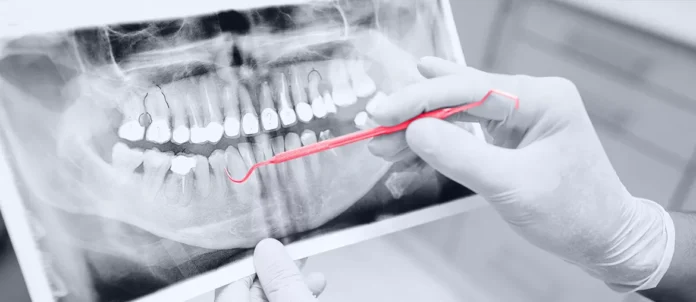
Machine learning algorithms used in dentistry can analyze more than 200,000 dental X-rays in training phases, identifying microscopic patterns linked to caries or root resorption – patterns often invisible to the naked eye.
Building Trust in Machine Learning Outcomes
For clinicians to rely on machine learning tools, transparency matters. AI outputs must show not only what is detected, but why. Confidence builds when models explain the reasoning behind their recommendations, such as highlighting pixel intensity changes or correlating data with case histories.
Best practices for reliable adoption:
- Review AI results alongside patient records, not in isolation.
- Choose platforms that document algorithm updates and validation datasets.
- Use ML insights as a secondary opinion, especially in complex restorations or endodontic cases.
Dentistry thrives on trust – between doctor and patient, and increasingly, between clinician and algorithm.
Case Planning Becomes Collaborative
When evaluating restorative or orthodontic cases, machine learning tools can simulate multiple treatment paths. They provide 3D visualizations of projected outcomes, helping patients understand choices more clearly. This shared visualization improves communication, compliance, and satisfaction.
Practical benefits:
- Improved patient comprehension through visual evidence.
- Reduced case revisions due to more precise pre-planning.
- Faster approval from insurance and third-party evaluators.
In many practices, this transparency turns data into dialogue, strengthening patient trust in the treatment plan.
Data Privacy and Ethical Responsibility
With sensitive patient data feeding AI systems, ethics and security must be part of every conversation. Reliable providers anonymize and encrypt all records used for training. Clinicians should always verify how data is stored, processed, and retained.
Checklist for responsible ML use in dental settings:
- Confirm compliance with GDPR and HIPAA standards.
- Ensure datasets exclude identifiable patient information.
- Educate staff about AI-assisted workflows and patient communication.
Machine learning is only as ethical as the humans guiding it. Transparency with patients about how data supports care builds confidence and avoids misconceptions.
Predictive Precision in Every Case
In the coming years, dental case evaluation will likely move beyond detection into full predictive modeling. Systems will not only spot pathology but anticipate disease progression and suggest preventive care schedules. This evolution shifts the focus from reactive treatment to proactive wellness.
Imagine a clinical dashboard that alerts you to which patients are statistically more likely to develop peri-implantitis, based on their hygiene data and implant design. That’s the practical power of ML – insight that feels personal, not mechanical.
“When data becomes empathy in action, technology truly serves dentistry.”
Bringing It All Together
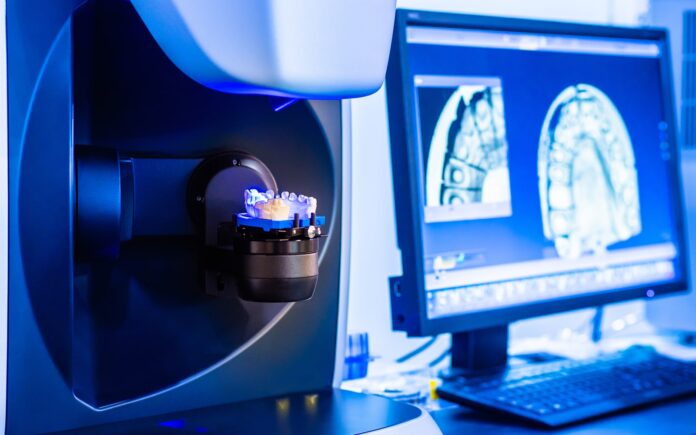
Machine learning is helping dentists evaluate cases faster, with sharper accuracy and clearer communication. It complements clinical judgment, supports staff efficiency, and deepens patient trust through evidence-backed care. The future of case evaluation isn’t about replacing human decision-making – it’s about giving it more reliable tools.
For clinicians who balance compassion with precision every day, that’s not a disruption. It’s a quiet, welcome form of relief.