Germany has no shortage of places that look as though they’ve been lifted from the pages of a storybook.
Beyond the bustle of cities like Berlin and Munich lie quiet towns where cobblestone streets curve past timber-framed houses, towers rise over old walls, and castles overlook rivers and valleys.
For travelers who want more than sightseeing, these places feel like stepping into another world – slower, warmer, and altogether magical.
Key Points
- Germany’s small towns preserve medieval architecture and rich traditions.
- Each has its own fairy-tale atmosphere, from castles to riverside vineyards.
- They offer a slower pace of travel and fewer crowds than the big cities.
- Festivals, food, and local crafts keep history alive in everyday life.
1. Rothenburg ob der Tauber: A Medieval Story Come Alive
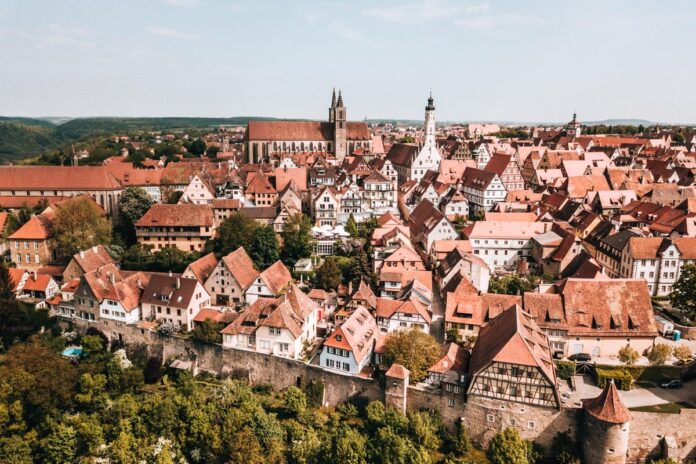
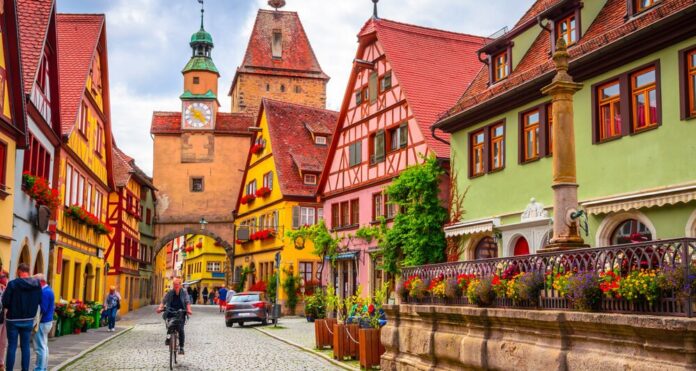
Rothenburg ob der Tauber is often the first town people think of when imagining a German fairy tale—and with good reason. Encircled by intact medieval walls and dotted with colorful half-timbered houses, it feels more like a film set than a real place.
The Market Square buzzes with life, while the narrow alleys invite you to wander aimlessly, discovering hidden courtyards and charming shops.
One of Rothenburg’s most enchanting moments is the Night Watchman’s tour, which takes visitors through centuries of stories under lantern light. And if you’re visiting during December, the Christmas market transforms the entire town into a living postcard.
2. Bacharach: Romance Beside the Rhine
On the banks of the Rhine River lies Bacharach, a town steeped in wine, romance, and history. Hillside vineyards frame its narrow lanes, while Stahleck Castle overlooks the town from above, adding to its fairy-tale silhouette. Evenings here often mean sipping Riesling in a tavern while riverboats glide past.
Many travelers balance the serenity of towns like Bacharach with the excitement of larger cities nearby.
3. Füssen: At the Foot of Fairy-Tale Castles
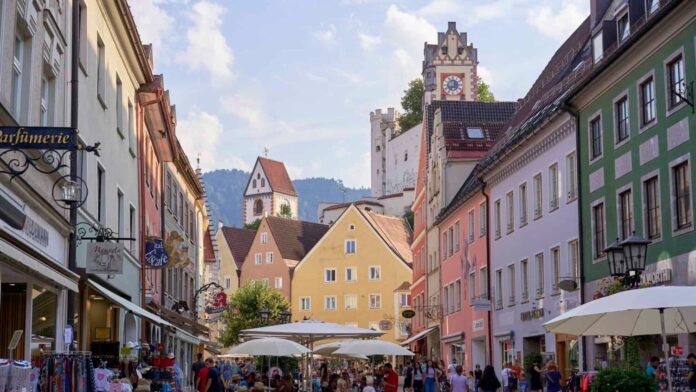
Füssen, in Bavaria’s Allgäu region, is known both for its charm and for what lies just above it: Neuschwanstein Castle. But the town itself is more than a gateway. Its old quarter has pastel houses, quiet squares, and views of the River Lech, while the surrounding lakes and mountains provide endless opportunities for hiking or cycling.
Only 2 hours from Munich, and tied to Neuschwanstein Castle.
Spending a night or two in Füssen means you can enjoy the famous castle without rushing, but also appreciate the slower rhythm of Bavarian life.
And if you’re traveling on your own but prefer to share the journey, arranging companionship through Louisa in Munich can make the trip feel warmer and more connected, turning a solo adventure into something shared.
4. Monschau: A Tucked-Away Gem in the Eifel
Monschau, not far from the Belgian border, is one of those places you only find if you’re looking for it. Its half-timbered houses hug the Rur River, and its steep streets are lined with cafes, small museums, and artisan shops.
The town is best known for its mustard mill, which still produces traditional varieties, and for its Christmas market, where stalls are lit up in soft golden light against the timber façades.
For those who want nature as well as charm, Monschau is also a gateway to the Eifel National Park. Forest trails and scenic viewpoints turn this quiet town into the perfect base for exploring both culture and landscape.
5. Quedlinburg: A UNESCO Treasure
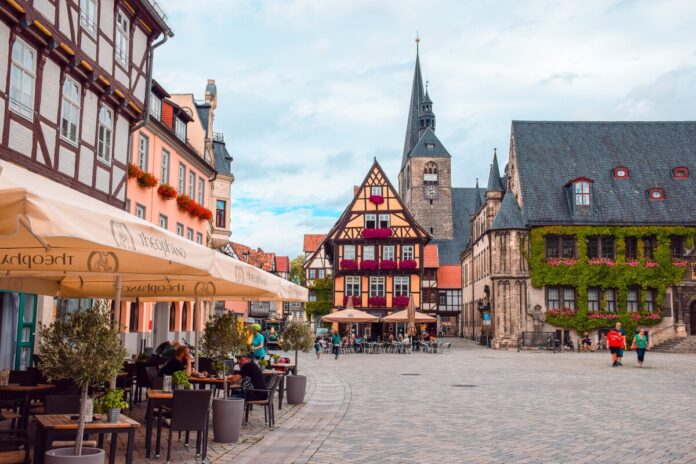
Quedlinburg is less known internationally, but it holds a unique status as a UNESCO World Heritage Site. With over 1,300 half-timbered houses spanning several centuries, the town feels like a living archive of German architecture.
The castle hill, crowned by the Collegiate Church of St. Servatius, provides sweeping views of its red rooftops, and the history of royal coronations adds a layer of significance to every corner.
The town’s streets are filled with artisan shops and cozy inns, making it a place where you can not only admire history but also live in it for a few days.
6. Meersburg: Where Castles Meet Lake Constance
Few towns can match the fairy-tale setting of Meersburg, perched above the shimmering waters of Lake Constance.
Here you find not one but two castles: the Old Castle, said to be the oldest inhabited fortress in Germany, and the Baroque New Castle with views stretching across the lake.
What sets Meersburg apart is the mix of history and leisure. The vineyards that slope toward the water invite you to taste regional wines, and evenings often end with dinner on a terrace where the lake reflects the last light of day.
7. Dinkelsbühl: A Quiet Rival to Rothenburg
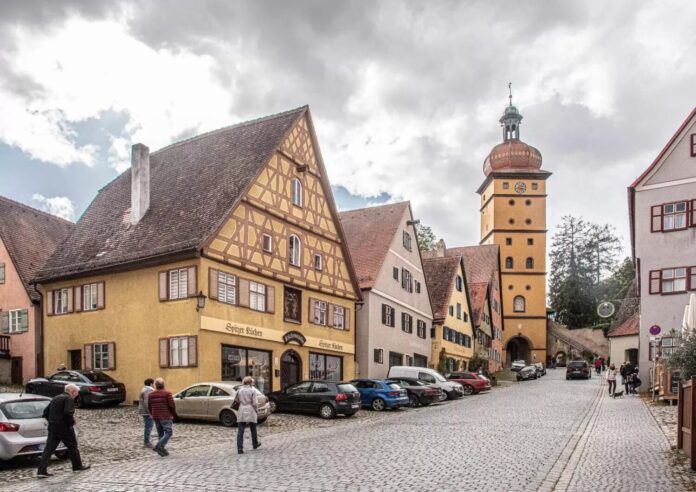
While Rothenburg draws the crowds, Dinkelsbühl offers the same fairy-tale charm with more breathing space. Its medieval walls remain intact, enclosing streets lined with pastel-colored houses and the impressive St. George’s Minster.
Every July, the town comes alive during the Kinderzeche festival, where residents reenact historical events in traditional costumes.
For visitors, it’s a chance to see history performed by the community itself, making the town feel less like a museum and more like a living village.
8. Görlitz: Germany’s Cinematic Jewel
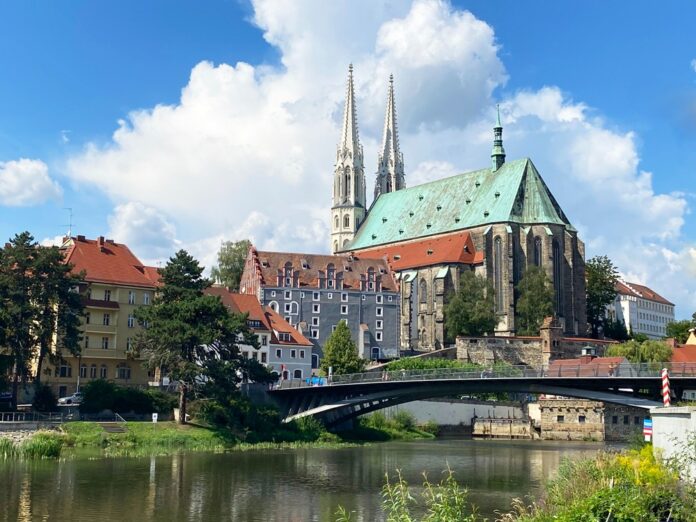
At Germany’s eastern edge sits Görlitz, a town so beautiful that film crews from around the world flock here.
Its untouched old town, with Gothic, Renaissance, and Baroque buildings, has stood in for cities across Europe in countless movies.
Walking through Görlitz feels like crossing centuries in minutes. Every square seems carefully staged, but it’s all authentic.
And with Poland just across the bridge, it’s also a place where two cultures meet, adding an extra layer of fascination.
Why These Towns Feel Like Fairy Tales
What makes these towns unforgettable is not just their architecture, but the sense of continuity they hold.
Centuries-old traditions are still part of daily life, whether through seasonal festivals, regional food, or crafts that have been passed down for generations.
Travelers leave with the impression that these places are not frozen in time but thriving quietly, just at a slower pace than the cities.
To capture the feeling of a German fairy tale, think beyond the castles and timbered streets. It’s also in the simple details:
- The sound of church bells echoing through a valley.
- The smell of mulled wine at a winter market.
- The sight of flower boxes spilling color over centuries-old windows.
These are the little things that make the experience stay with you.
Final Thoughts
Germany’s small towns are proof that travel doesn’t always have to mean grand capitals or packed itineraries.
Sometimes, the most rewarding journeys are those where you slow down, linger in a market square, or sit by the river with a glass of wine while the evening settles in.
Whether you choose Rothenburg’s medieval walls, Bacharach’s riverside romance, or Görlitz’s cinematic streets, each town offers a different shade of magic.
Together, they show that fairy tales don’t just belong in books—they’re still waiting, scattered across Germany, one cobblestone at a time.