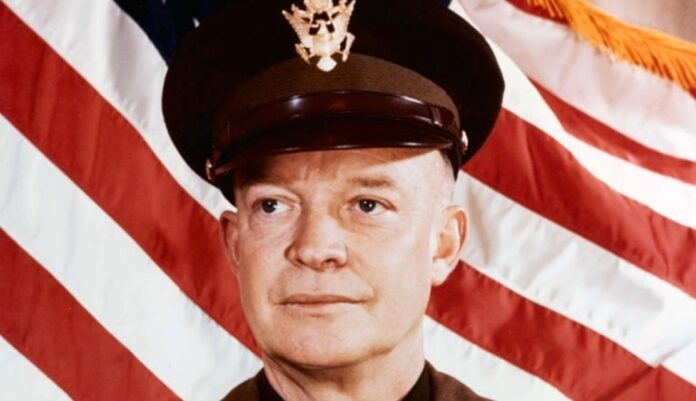
On Veterans Day, we honor those who have served, those who carried the burden of protecting liberty. Few in American history carried that burden with as broad a scope as Dwight David Eisenhower. Supreme Commander in World War II, architect of Cold War order, president, and quietly moral man. His life offers lessons about leadership, sacrifice, and the weight of responsibility.
Humble Kansas Origins & Early Struggles
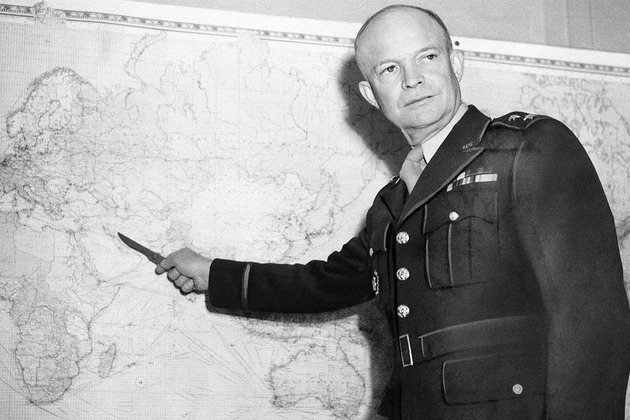
Eisenhower was born in Denison, Texas, in 1890 but raised in Abilene, Kansas. He was one of seven brothers in a family of modest means. From the start, there was no automatic path to greatness—he had to earn everything.
He was nicknamed “Little Ike” as a boy. His friendships in Kansas included Edward “Swede” Hazlett; these early bonds shaped his sense of loyalty and fairness.
At West Point, he was an average student academically—neither outstanding nor disastrous—but he excelled in leadership and grit.
There is a lesser-known controversy: stories suggest Ike might have played semi-professional baseball under an alias in Kansas before his West Point days, which, if true, could have violated rules about amateur status. The evidence is mixed, and none has been conclusively proven.
Rising Through the Military Ranks
Before WWII, Eisenhower held many roles that taught him more than textbook strategy: staff officer, planner, and coordinator. He wasn’t initially famous.
But his superiors (notably George C. Marshall) began to trust him with increasing responsibilities.
During WWII, as Supreme Commander of the Allied Expeditionary Forces in Europe, Eisenhower oversaw the planning and execution of major campaigns: North Africa (Operation Torch), Sicily and Italy, and then the decisive D-Day invasion in Normandy.
His leadership style was notable for balancing input from Allied leaders, maintaining morale, and making tough calls under pressure.
He had to manage conflicting egos, unpredictable weather, logistics nightmares, and the knowledge that failure would cost enormous lives. When bad weather threatened to break the Normandy timeline, Eisenhower made the call anyway: “Ok, let’s go.”
Private Pain, Public Duty
Less often mentioned: Eisenhower’s personal life had its shadows. His first son, Doud, died at age three from scarlet fever—this kind of grief shapes a person’s inner life, though it isn’t obvious in public acts.
Mamie, his wife, carried her own burdens. They often moved, lived under stress, had anxieties about Ike’s absences, and the horrors he saw.
As First Lady, she was resilient, often underappreciated, managing the household, the social demands, and the personal losses behind the public role.
President & Peacetime Challenges
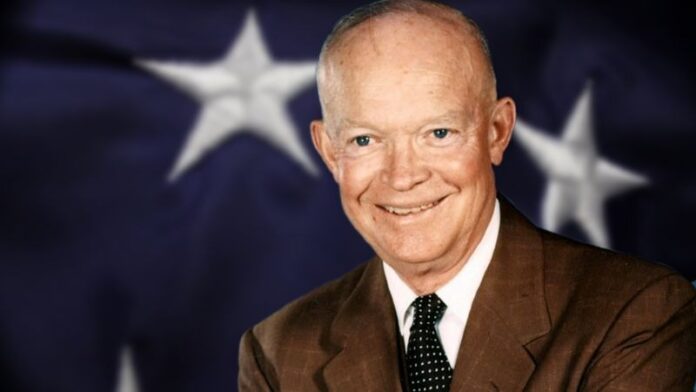
After WWII, Eisenhower turned to politics and governance without losing his soldier’s mindset. As President (1953-1961), he faced Cold War threats, domestic demands, civil rights pressures, and the balancing of military strength with diplomatic caution.
Many remember the Interstate Highway System, but what’s less spoken about is how his own youthful participation in the 1919 Army Transcontinental Motor Convoy across the U.S. influenced his understanding of logistics, national cohesion, and infrastructure.
That road trip showed him how weak America’s road network was, leading later to prioritizing highways as a strategic as well as civic asset.
Eisenhower also promoted civil rights more than some of his predecessors. He sent federal troops to enforce school desegregation in Little Rock (1957), signed the Civil Rights Act of 1957, and in private, often showed his discomfort with segregation.
He didn’t always satisfy activists, but his presidency helped set the legal and moral framework for what would come later.
Another lesser-known detail: he established secret planning for the continuity of government in case of nuclear war or catastrophe. He understood the stakes.
Retreat, Reflection & Legacy
Eisenhower and Mamie eventually purchased a farm on the outskirts of Gettysburg, Pennsylvania. It was not just a home; it was a symbolic place.
Gettysburg is a site of America’s unfinished business—civil war, national division—and Eisenhower found in that land a connection to history and sacrifice.
His farm was a working cattle operation, with Angus cattle; he didn’t just retreat from war physically but also from the kind of incessant politicking many presidents endure. The farm was his respite, his thinking ground.
Eisenhower also changed the name of Franklin Roosevelt’s retreat, “Shangri-la” to “Camp David,” a simpler name reflecting something more grounded.
He once said that “Shangri-la” sounded too fancy for a Kansas farm boy. That humility often came through.
Lessons for Today’s Guardians of Freedom
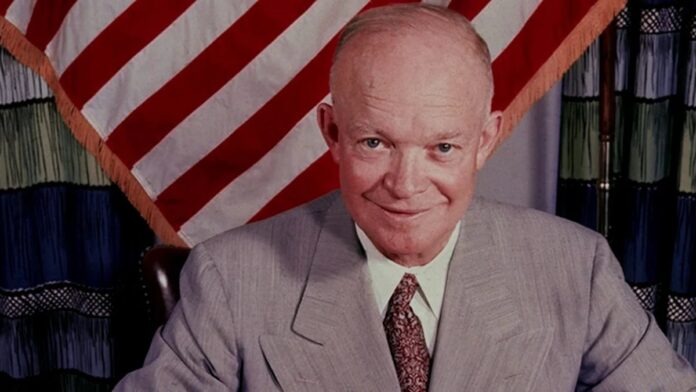
Eisenhower’s life is full of contradictions—and strengths born of those contradictions. He was a great general who also knew politics. A wartime commander who desired peace. A public man with private vulnerabilities.
On this Veterans Day, several takeaways:
- Preparation matters: Victory is won long before conflict begins—through training, logistics, planning, alliances.
- Moral courage counts: Enforcing civil rights, taking unpopular decisions, speaking truth, even when easy ways exist.
- Leadership under pressure: When the stakes are life, death, or global scale, steadiness, empathy, and the ability to reconcile conflicting demands are what make a difference.
- Legacy is mixed: Not everything was perfect. But understanding both achievements and failures, limits and strengths, helps us do better.
Remembering Eisenhower
Dwight D. Eisenhower was more than the sum of D-Day and the Interstate Highway Act. He was a man shaped by loss, burdened by duty, grounded in humility.
His story reminds us that freedom is never static; those who defend it must also sustain it with wisdom, character, and foresight.
As we honor all veterans this November, let’s also honor the complexity of service. Let’s support our veterans, safeguard our institutions, and remember that in every generation America’s freedom is earned—not given.