

The misery of depression affects millions every year. No one escapes the impact of depression, neither young nor old, rich nor poor. When depression strikes, it changes the way one thinks and feels about everything. The people affected by depression often:
- Feel empty inside
- Have no energy for daily tasks
- Loose interest in things they used to enjoy
- Feel worthless or guilty
- Have trouble sleeping or sleeping too much
It happens sometimes that some people’s rooms become a reason for their depression. It is common, not an individual case. They’re not messy by choice. Remember that depression is a treatable condition. Let’s understand how a room can affect a person’s depression.
Is a messy room a sign of depression?

Many people who live in an unorganized space (aka ‘messy room’) often feel worse about themselves. Thoughts like ”I am a mess” or ”I am a failure” are some of their first thoughts. These dark thoughts are not real, but it is the depression that can create such feelings.
Let’s understand with an example. Mark is 28 years old and is an office worker. It was three months ago that he started to feel very sad and always tired, and he did not want to leave his bed; as a consequence, his room started to get messier and messier. Because of his depression, Mark felt like there was no way out of this situation. Mark’s room was not always dirty. Before he got sad, Mark was always the one to keep his things clean. However, depression turned everything. His room would look exactly like this:
- Clothes were scattered all over the floor
- Five coffee cups were on his desk
- The pizza boxes were beneath his bed
- Books and papers were lying all over the place
- Glasses with food on the bedside table
Mark felt embarrassed when he saw his room. He felt that cleaning it was impossible, and because of that, he stayed in bed more often. He even avoided having his friends or family come over to visit.
Why did this happen to Mark?
Mark was not lazy but sick. Depression made him feel very tired all the time. Simple activities like picking up clothes became extremely difficult for him. His brain told him to tidy up, but his body was out of energy.
The untidy room also added to the feeling of low self-worth. He thought he was bad because of the room. This made him unhappier. Now the sadness made it even more difficult to clean. He was trapped in the cycle.
How to get motivated to clean when overwhelmed by mess?

The first step of overcoming depression is getting help. Talking to a loved one or a mental health specialist specialized in depression treatment can turn the depression wave. These professionals are well aware of depression and do not judge people adversely for being in difficulty.
Based on the assessment of Mark’s condition, his psychiatrist provided a treatment plan, including medication (such as antidepressants that help relieve symptoms of depression), psychological therapies (that aim to relieve emotional distress), lifestyle changes, and guided self-help.
His psychiatrist didn’t give him an out-of-the-box to-do list, but rather basic, personalized self-help guidance based on his situation, such as:
Cleaning a small section
Mark tried to clean not everything, but just one coffee cup from his table. It takes him 2-3 minutes to clean. This little task made him feel a little bit sick, but the feeling went away.
The next day, Mark also picked up a cup and old food wrappers (e.g., an empty pizza box). He threw away the pizza box, which was tiny but significant.
Learns the five things method
His psychiatrist taught him another simple solution to clean his room. He was told that every room was composed of five different kinds of things only:
- Trash: items that should be thrown away
- Dishes: items that should be shifted to the kitchen
- Clothes: dirty clothes that should be in the laundry box or room. Or, need to be washed or properly folded.
- Visible items (e.g., clean bed, folded blanket, etc.) that are supposed to be in the room
- Misplaced items (e.g., shoes, car keys) that should be somewhere else
Mark, for example, gathered the garbage only on the first day and took the leftover dishes to the kitchen only on the second day. He found that cleaning is less stressful now.
Mark’s daily routine
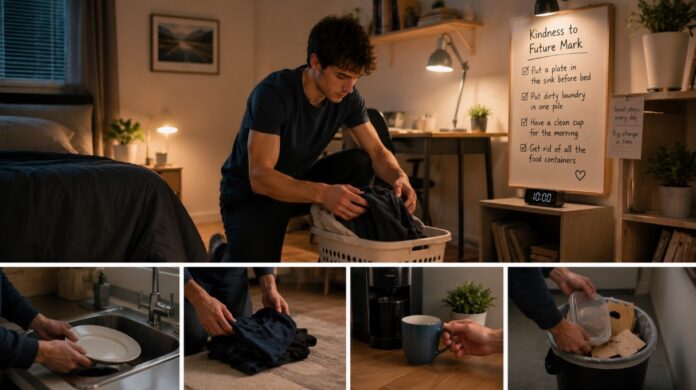
Mark started doing little things every day. He called them his “kindness to future Mark” tasks:
- Put a plate in the sink before bed
- Put dirty laundry in one pile
- Making sure he had a clean cup for the morning
- Get rid of all the food containers
It only took around ten minutes, but it made his day a lot better.
Mark’s bad days
Mark still had the bad days. On some days, the room was not even clean at all. He learned that it was okay when his room went back to being untidy. He also gained an understanding that it was more like a roller coaster. There are times it becomes worse, but after that, it rises again.
On really bad days, Mark used paper plates. He did not fold his clothes. He just ensured clean water and safe food. This was all.
Getting help
Mark realized that it was not only cleaning that he needed help with. He always follows up with his depression psychiatrist about his feelings of sadness. His doctor gave Mark some new insights into depression. Mark found that millions of people felt the same way.
Mark found these types of help:
- Online therapy sessions from home, helping to continue expert care
- Support groups with other people like him
- Phone apps that reminded him to do small tasks
Remember that follow-up care isn’t a sign of weakness. It’s about maintaining your mental health through regular check-ups, just like regular physical check-ups.
Mark’s room today

Mark’s room is not perfect at the moment, but it is still a nice place. Sometimes, on a chair or near the desk, there are clothes and an empty coffee cup. Nevertheless, Mark can find his stuff. He can hang out with friends at home. He is at ease in the place where he lives.
Also, Mark no longer feels ashamed. Now he understood that it is normal to have a messy room during difficult times. He knows he is not by himself.
If you’re experiencing similar experiences to Mark, please don’t suffer in silence. Help is available, even online, from platforms like GABA Telepsychiatry. Take the first step toward self-care by meeting with a specialist, whether in person or online, because everyone’s situation is different. What works for one person may not necessarily work for everyone. Treatment for depression is best based on the individual’s circumstances (e.g., comprehending the underlying cause, any underlying medical conditions, family history, nutritional assessment, etc.) and experience (aka symptoms and their frequency).