
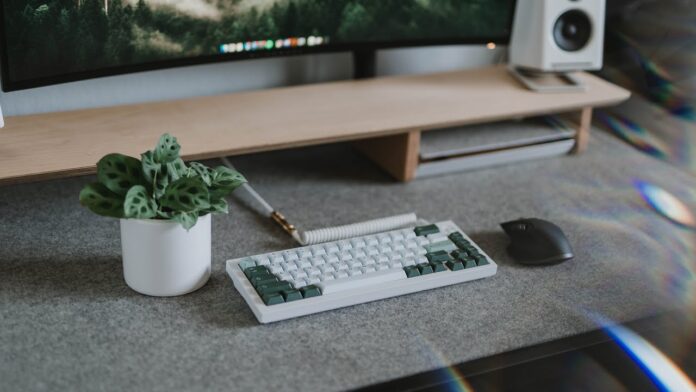
A keyboard can either help your ideas flow or slow everything down. Many people assume typing speed depends only on practice. In reality, the way a keyboard is configured plays a huge role in how quickly and comfortably you type. Small adjustments in layout, software, and ergonomics can remove friction you may not even realize is there.
A faster keyboard setup is not about expensive hardware or complicated tricks. It is about aligning the keyboard with how your hands move and how your brain processes words. When the setup feels natural, typing becomes smoother, more accurate, and less tiring during long sessions.
Choosing Input Software That Improves Typing Efficiency
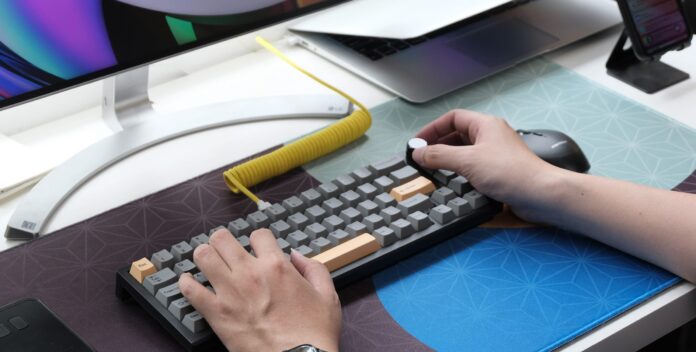
Keyboard speed is not just about hardware. Input software can significantly affect how fast and smoothly you type, especially when working with multilingual text or predictive typing systems.
Some input systems include smart suggestions, phrase prediction, and quick symbol entry. These features can shorten the number of keystrokes needed for common words or expressions.
For example, many users working in Chinese or multilingual environments rely on tools like 搜狗输入法电脑版 because it provides powerful prediction algorithms, customizable dictionaries, and adaptive learning that improves over time.
Here are a few features worth paying attention to when choosing input software:
- Predictive typing that suggests complete words or phrases
• Cloud dictionaries that adapt to personal vocabulary
• Shortcut support for punctuation and symbols
• Quick switching between languages
When software anticipates what you intend to type, the keyboard begins to feel much faster even if your typing speed stays the same.
Positioning Your Keyboard for Natural Hand Movement
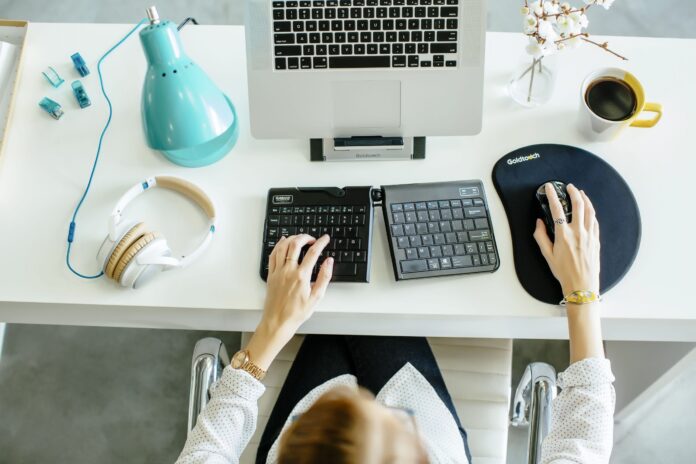
A surprising number of typing problems come from simple desk positioning. Even a great keyboard can feel slow if it forces your wrists or fingers into awkward angles.
A comfortable typing position allows your hands to move freely without tension. When posture improves, typing becomes more fluid and mistakes often decrease.
The most effective positioning changes usually include:
- Keep the keyboard at elbow height so forearms stay parallel to the desk
• Allow wrists to float slightly rather than resting heavily on the desk
• Place the keyboard directly in front of your body instead of angled
• Maintain a small gap between the desk edge and keyboard
Important note
Ergonomic studies from Cornell University’s Human Factors and Ergonomics Lab show that neutral wrist positioning significantly reduces strain during typing and improves long session comfort.
Small changes in positioning may feel unusual at first. After a few days, most users notice their typing rhythm becomes smoother and more relaxed.
Adjusting Keyboard Settings for Faster Response
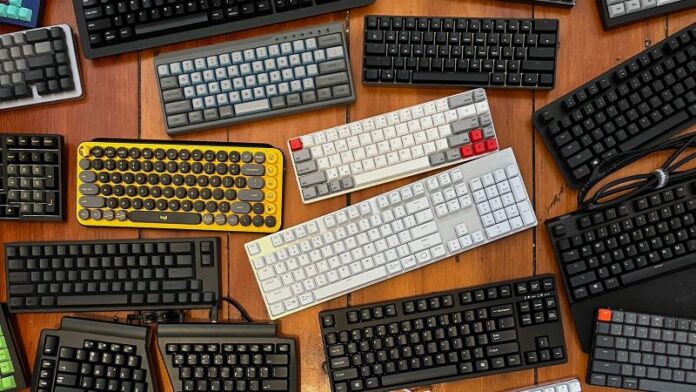
Modern operating systems include built-in keyboard settings that many people never adjust. These settings control how quickly keys repeat and how long a key must be pressed before repeating begins.
When configured correctly, these settings can make the keyboard feel more responsive.
Here are two important parameters to adjust:
- Key repeat rate
Increasing this value allows characters to repeat faster when holding a key. This helps when editing text or navigating documents. - Key repeat delay
Reducing the delay shortens the time before a held key begins repeating.
Example Keyboard Response Settings
| Setting | Slow Configuration | Fast Configuration |
|---|---|---|
| Key repeat delay | 500 ms | 250 ms |
| Key repeat rate | 20 characters/sec | 35 characters/sec |
After adjusting these settings, spend a few minutes typing normally. The difference often feels subtle but noticeable, especially during editing tasks.
Organizing Shortcuts That Reduce Typing Work
Another overlooked way to make a keyboard feel faster is reducing how much typing is needed in the first place. Keyboard shortcuts and text expansion tools remove repetitive actions.
Think about how often you type the same phrases, commands, or formatting instructions. Automating those entries can save a surprising amount of time.
Common shortcut strategies include:
- Text expansion for frequently used phrases
• Keyboard shortcuts for navigation and editing
• Custom hotkeys for launching commonly used programs
• Clipboard managers that store frequently copied text
Did you know?
Research published by Microsoft Productivity Labs found that users who rely heavily on keyboard shortcuts complete document editing tasks up to 30 percent faster than users who rely mainly on mouse navigation.
Once shortcuts become muscle memory, your hands stay on the keyboard and typing flow remains uninterrupted.
Selecting the Right Keyboard Layout for Your Workflow

The keyboard layout itself influences typing efficiency. Most people use the standard QWERTY layout, but alternatives exist that reduce finger travel and distribute typing workload more evenly.
Layouts like Dvorak or Colemak rearrange key placement to prioritize frequently used letters. Some users report improved comfort and reduced finger movement after switching.
However, changing layouts requires patience and retraining muscle memory. For many people, customizing the existing layout provides a better balance.
You might consider adjustments such as:
- Remapping rarely used keys to more useful functions
• Assigning macro keys for repetitive commands
• Swapping modifier keys for easier access
• Adjusting function key behavior
A layout that matches your workflow allows your fingers to move naturally. Over time, the keyboard becomes an extension of how you think and write.
Final Thoughts
Typing efficiency rarely comes from a single change. It develops from a combination of comfortable positioning, responsive settings, helpful software, and consistent shortcuts.
Most improvements take only a few minutes to implement. The real benefit appears over time as your hands adapt and your workflow becomes smoother.
If typing feels slow or tiring, the solution may not be more practice. Often it simply means the keyboard needs a smarter setup. Small adjustments can transform the experience and make everyday work feel noticeably easier.